
Custom SaaS Development Services, Done Right
From first steps to post-launch iteration — we own it all.
We're a SaaS software development company that turns product ideas into scalable, enterprise-ready platforms — without the architecture mistakes that cost you a rebuild.


The SaaS Problems Most Development Teams Get Wrong
Most SaaS projects don't fail because of bad ideas — they fail because multi-tenancy, billing, security, and scalability are harder to get right than anyone budgets for. Here's where we come in.
Full-Cycle SaaS Software Development Services
Our SaaS product development services span the full cycle — MVP through to enterprise platform — with one team carrying the context from discovery to deployment and beyond. Here's what that looks like in practice.

Custom SaaS Development
We take products from concept to launch — multi-tenant architecture, subscription billing, role-based access, and audit logging built in from the start. Whether you're a founder with a SaaS idea that needs to become a real product, or an enterprise with internal tooling that should be generating revenue: this is where we start.

SaaS MVP Development
A focused, properly scoped MVP that takes real payments and generates real activation data. The point isn't speed for its own sake; it's getting something in front of real users while your runway still has room to act on what they tell you. We cut the scope that doesn't test your core assumption so you get signal, not a feature list.

SaaS Architecture & Technical Consulting
The architecture decisions made before a line of code is written will define your product's ceiling. We'll review your current setup — or design from scratch — covering stack selection, data modelling, tenant isolation strategy, security architecture, and infrastructure cost projections. Think of it as the technical health check that saves you a rebuild eighteen months from now.

SaaS Application Modernization
If your on-premise software should be a SaaS product, or your existing SaaS is struggling to keep up with what your customers need, we'll bring it forward. We've taken monolithic desktop applications and delivered them as cloud-native, multi-tenant platforms — without downtime and without losing customers in the transition. Your users don't need to know it happened.

SaaS Integration & API Development
The integrations your customers expect are part of your product's value — not an afterthought. We connect you to the tools that matter (Stripe, Auth0, HubSpot, Salesforce, and beyond), design a public API your customers can build on, and set up SSO, webhooks, and SCIM provisioning so your enterprise buyers have nothing to object to.

SaaS DevOps, Hosting & Ongoing Support
Most agencies ship and disappear. We set up the infrastructure to keep your SaaS running — CI/CD, IaC, monitoring, alerting — all before the first deployment. Then we stay: new features, performance tuning, scaling support, and a team that already knows your codebase when something needs fixing.
Not sure where to
start? Let's figure it out together.
Skip the sales pitch. Tell us where you are and what you're trying to build — we'll give you a straight answer on how we can help and what it would actually take to get there.
Book a Free ConsultationSaaS Products We've Built
From healthcare SaaS to B2B platforms to developer tools — we've built across the spectrum. Here's a sample of what we've shipped.
Codeaid
Scopic built Codeaid from scratch as a SaaS platform for technical hiring that goes beyond generic coding tests. The platform gives companies two ways to assess developers: Git-based, take-home challenges that mirror real development work, and an AI interviewer that turns each candidate's CV into skill-based questions, runs real-time graded interviews, and helps recruiters make more confident technical hiring decisions.
Read the full case study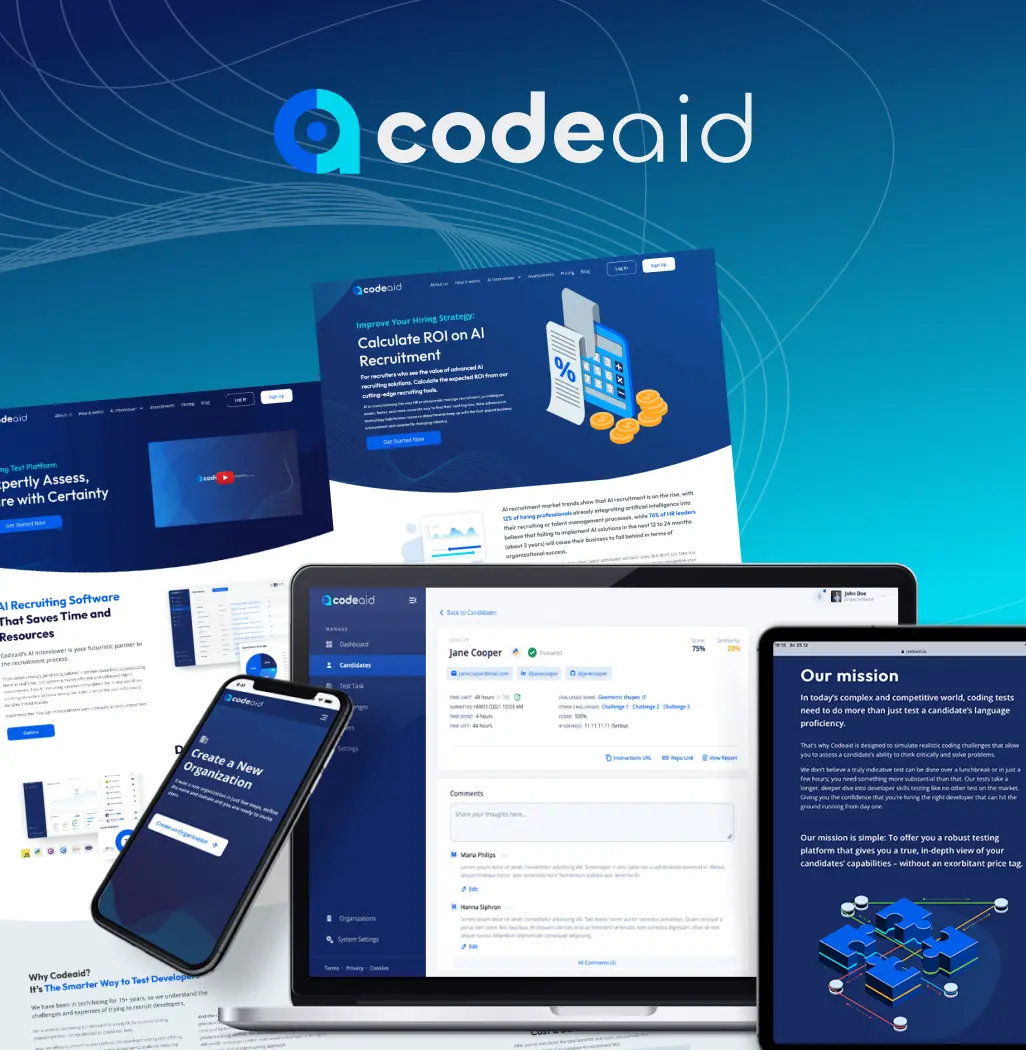
Akillion
Akillion is a B2B customer data and email marketing platform with an AI assistant built in from day one. Scopic designed the AI module to translate natural language into advanced customer filters, integrated MFA and encrypted storage, and delivered a platform that cut scheduling errors by 40% and drove a 25% increase in repeat business for Akillion's clients.
Read the full case study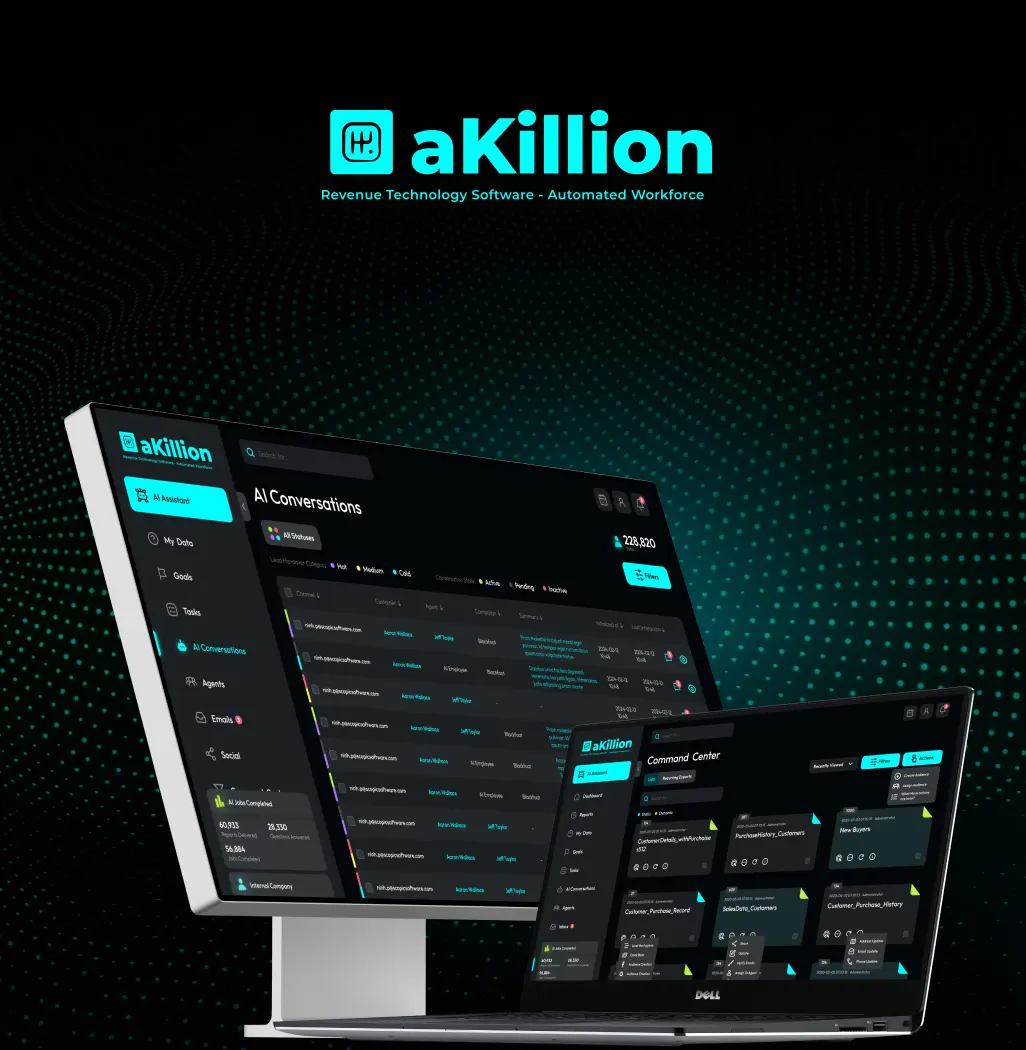

What You
Get With Custom SaaS Development Services
No-code tools and off-the-shelf platforms solve generic problems. If your SaaS needs to win enterprise deals, scale past 10,000 users, or handle compliance requirements — you need something built for it.
Multi-Tenant Architecture - Done Right
Built-In Subscription Billing
Enterprise-Ready From Day One
Infrastructure That Scales Without Surprise Bills
Fastest Time-to-Market
Long-Term Partnership, Not a Project Handoff
Multi-Tenant Architecture - Done Right
Multi-tenancy isn't a feature you add — it's the foundation everything else is built on. We choose the right isolation model for your product: shared schema, schema-per-tenant, or database-per-tenant — weighted against your compliance requirements, the data isolation standards your enterprise buyers expect, and the cost trade-offs between them.
Why SaaS Teams Choose Scopic — And Keep Coming Back






Proven Track Record in SaaS
Across 1,500+ projects delivered over two decades, including SaaS products spanning healthcare, fintech, B2B tools, and developer platforms. We've been doing this since 2006 — long enough that many of our earliest SaaS clients are still with us.
SaaS-Specific Engineering Depth
Multi-tenancy, subscription billing, RBAC, SSO, audit logging, and production observability aren't features our engineers have read about — they're problems they've solved in shipped products. That depth is what separates a SaaS specialist from a generalist shop that's built a few web apps and added a login screen.
Certified AWS & Google Cloud Partners
We hold AWS Solutions Architect and GCP Professional Cloud Architect certifications and maintain active partner status with both. For enterprise procurement teams running vendor evaluations, that's meaningful signal — it means we're building on infrastructure we know at depth, not deploying to platforms we're learning on your budget.
Product Thinking, Not Order-Taking
Most agencies won't push back on scope — it's not in their interest. We do it in discovery, before a line of code is written, because building the wrong thing is the most expensive mistake in software. We'll challenge assumptions, question features that don't serve your core hypothesis, and tell you what we'd cut if it were our product and our runway. That's not friction — it's the job.
Full-Cycle Ownership
Discovery, architecture, development, QA, launch, post-launch iteration — handled by one team with one thread of continuity. The engineer debugging a production issue at month eight is the same one who made the architectural decision at month one. No agency handoffs. No context that gets lost in a document no one reads.
Client-Centric Partnership
Median engagement length: 4.6 years. Customer retention rate: 95%. That's not loyalty — that’s what happens when the relationship keeps being worth it. We don’t clock out at launch; post-launch is just the next phase of the same engagement, with the same people and the same institutional knowledge of your product driving it forward.

What SaaS Clients Say About Scopic

They are key to the success of the project.
Ben RalstonPresident, Synchronus
How We Build SaaS:
From First Conversation to Production System
Six stages, one team, no handoffs. Here's how a Scopic engagement actually runs.


Discovery & Scope Validation
Stakeholder interviews, market context, and a hard look at your proposed scope. We'll push back on anything that doesn't serve your core thesis — and sharpen what does. You get a validated architecture proposal, a delivery plan, and the confidence that what we're about to build is actually the right thing to build.


Architecture & Design
Multi-tenancy, data models, security architecture, infrastructure cost planning, and UX prototypes — validated before a line of production code is written. These decisions determine what your product can and can't do at scale. We map them out with full visibility so there are no surprises when it matters.


Agile Development
Demos for every iteration so you see progress in real time. Security by design from sprint one — not retrofitted after a penetration test finds something uncomfortable. We build in the open, which means fewer surprises and earlier course corrections when the product reality diverges from the original plan.


Testing & QA
Functional, performance, and security testing are standard. Load testing simulates realistic traffic before launch — because discovering your architecture's ceiling after your biggest customer reports a slowdown is the wrong time to find it. For SaaS specifically, we test the things that matter: tenant isolation, billing edge cases, SSO flows, and anything that touches customer data.


Launch & Deployment
Staged rollout, zero-downtime deployment, and a full observability stack — Datadog, Sentry, alerting — up and running before the first user hits the platform. We don't hand you the keys and disappear: we walk through the first deployment with you and stay on-call through the critical window. The team that built it is the team that launches it.


Scale & Evolution
A SaaS product at launch is a hypothesis. What it becomes over the following 12 months — based on what your users actually do, what your metrics surface, and what your market demands — is the product. We stay for that: feature iteration, infrastructure scaling as usage grows, and a roadmap shaped by real data rather than the original spec. The people who built it are the people evolving it.

Discovery & Scope Validation
Stakeholder interviews, market context, and a hard look at your proposed scope. We'll push back on anything that doesn't serve your core thesis — and sharpen what does. You get a validated architecture proposal, a delivery plan, and the confidence that what we're about to build is actually the right thing to build.
Architecture & Design
Multi-tenancy, data models, security architecture, infrastructure cost planning, and UX prototypes — validated before a line of production code is written. These decisions determine what your product can and can't do at scale. We map them out with full visibility so there are no surprises when it matters.
Agile Development
Demos for every iteration so you see progress in real time. Security by design from sprint one — not retrofitted after a penetration test finds something uncomfortable. We build in the open, which means fewer surprises and earlier course corrections when the product reality diverges from the original plan.
Testing & QA
Functional, performance, and security testing are standard. Load testing simulates realistic traffic before launch — because discovering your architecture's ceiling after your biggest customer reports a slowdown is the wrong time to find it. For SaaS specifically, we test the things that matter: tenant isolation, billing edge cases, SSO flows, and anything that touches customer data.
Launch & Deployment
Staged rollout, zero-downtime deployment, and a full observability stack — Datadog, Sentry, alerting — up and running before the first user hits the platform. We don't hand you the keys and disappear: we walk through the first deployment with you and stay on-call through the critical window. The team that built it is the team that launches it.
Scale & Evolution
A SaaS product at launch is a hypothesis. What it becomes over the following 12 months — based on what your users actually do, what your metrics surface, and what your market demands — is the product. We stay for that: feature iteration, infrastructure scaling as usage grows, and a roadmap shaped by real data rather than the original spec. The people who built it are the people evolving it.
The Tech Stack Behind Our SaaS Products
We're not here to tell you what tech we like — we choose the tools that fit your needs for scale, budget, and long-term support, then build with them at depth.
SaaS Security, Compliance & Multi-Tenant Architecture
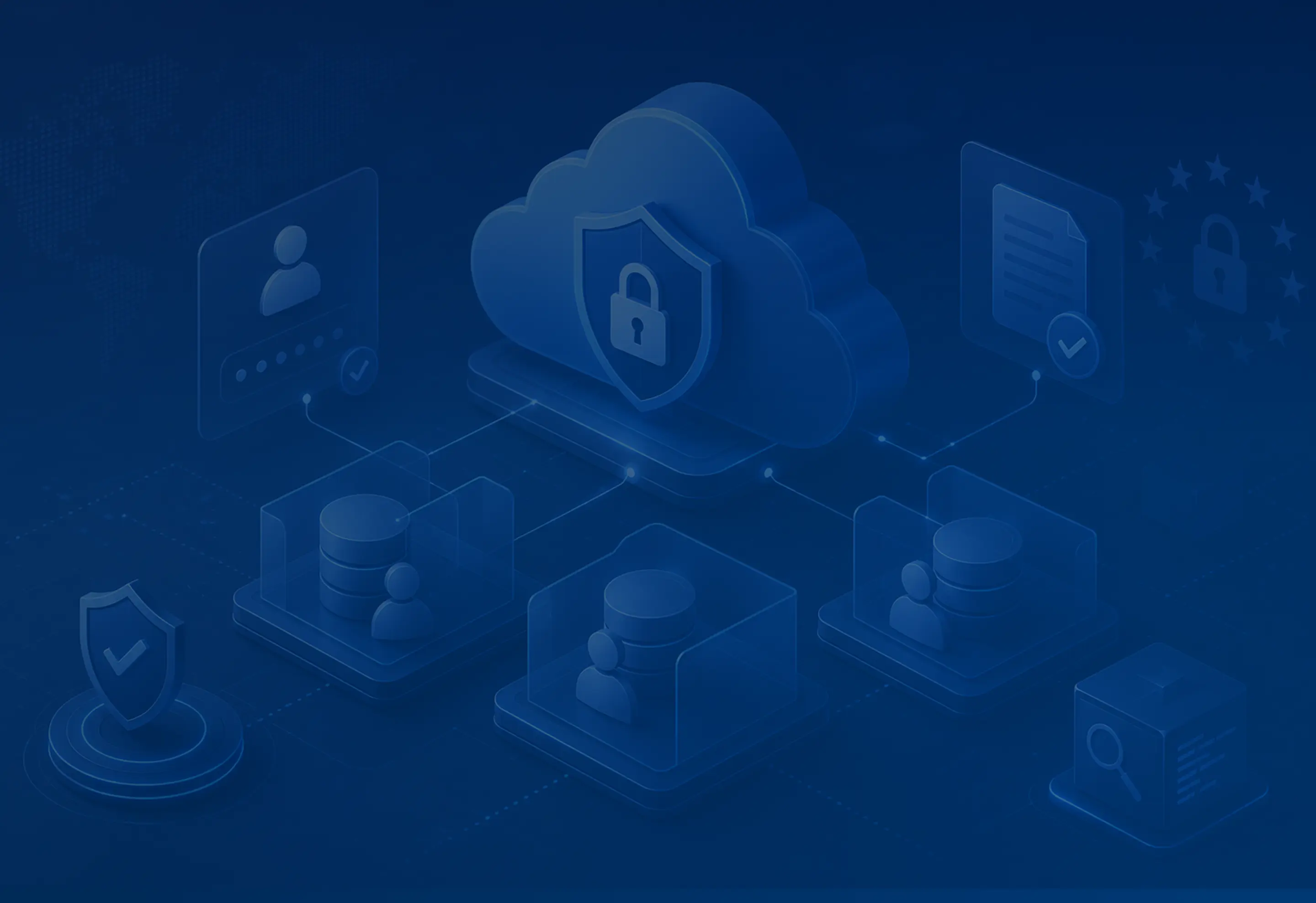
Every enterprise SaaS deal hits the same wall: data isolation, SSO, SOC 2, GDPR, audit logs. We've been through that conversation enough times to build the answers in before anyone asks.

SOC 2 Type II
Our engineering practices are aligned to SOC 2 trust service criteria — security, availability, and confidentiality — from architecture through deployment. You're not retrofitting compliance when a customer asks for it; you're shipping with it already in place.
Multi-Tenant Data Isolation
Row-level security, schema-per-tenant, or database-per-tenant — chosen based on your compliance requirements, your enterprise buyers' isolation expectations, and the cost trade-offs between them. Not a default pattern. Not the easiest option. The right one for your product.
GDPR & CCPA
Data-subject rights, regional data residency, and consent management are built into the data model. If you're selling into Europe or California, this isn't optional and we treat it that way.
Encryption
AES-256 at rest, TLS 1.2+ in transit, key rotation, and customer-managed key support where required. Every enterprise security questionnaire asks for these. We have the answers documented and the implementation behind them.
ISO 27001
ISO 27001 alignment means systematic, documented information security management — risk assessment, access controls, incident response. For enterprise buyers in regulated industries, this is the standard they're looking for before a contract gets signed.
SSO & Identity
SAML 2.0, OIDC, and SCIM provisioning — built in, not added in a sprint when a prospect's IT team asks for it. Enterprise customers expect SSO as a baseline. We build it as one.
HIPAA
For SaaS products handling protected health information, we build to HIPAA technical safeguard requirements — encryption, access controls, audit logging, and transmission security. See our healthcare software development page for what that means in practice for your product.
SOC 2 Type II
Our engineering practices are aligned to SOC 2 trust service criteria — security, availability, and confidentiality — from architecture through deployment. You're not retrofitting compliance when a customer asks for it; you're shipping with it already in place.
Multi-Tenant Data Isolation
Row-level security, schema-per-tenant, or database-per-tenant — chosen based on your compliance requirements, your enterprise buyers' isolation expectations, and the cost trade-offs between them. Not a default pattern. Not the easiest option. The right one for your product.
GDPR & CCPA
Data-subject rights, regional data residency, and consent management are built into the data model. If you're selling into Europe or California, this isn't optional and we treat it that way.
Encryption
AES-256 at rest, TLS 1.2+ in transit, key rotation, and customer-managed key support where required. Every enterprise security questionnaire asks for these. We have the answers documented and the implementation behind them.
ISO 27001
ISO 27001 alignment means systematic, documented information security management — risk assessment, access controls, incident response. For enterprise buyers in regulated industries, this is the standard they're looking for before a contract gets signed.
SSO & Identity
SAML 2.0, OIDC, and SCIM provisioning — built in, not added in a sprint when a prospect's IT team asks for it. Enterprise customers expect SSO as a baseline. We build it as one.
HIPAA
For SaaS products handling protected health information, we build to HIPAA technical safeguard requirements — encryption, access controls, audit logging, and transmission security. See our healthcare software development page for what that means in practice for your product.
Ready to build? Let's talk about your SaaS product.
Share where you are and what you're trying to achieve. We'll give you a straight answer on how we'd approach it — and a proposal in your inbox within 3 business days.
FAQs: SaaS Development Services

Let's Turn Your Idea Into a Product
Whether you've got a detailed spec or just a problem worth solving — we'll help you find the fastest path forward. Book a free consultation and walk away with a clear direction and a rough project estimate in 3 business days. No pitch, no pressure.



 Message Scopio