

Table of Contents
“This article contains content that has been artificially generated or manipulated using AI tools.”
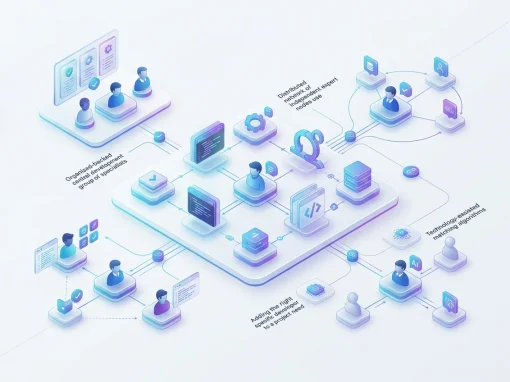
Choosing among web portal development companies requires more than comparing general web-development portfolios. A customer self-service portal, multi-organization partner platform, employee hub, or regulated patient portal can require very different approaches to identity, permissions, workflow automation, integrations, reporting, security, and scale. This guide compares eight providers based on portal-specific capabilities and documented project evidence rather than generic popularity or review rankings. The companies are presented alphabetically, not ranked, and factual provider claims are based primarily on current first-party documentation rather than hands-on comparative testing by Scopic.
If you are still evaluating the business case for a portal, see our benefits of a web portal guide.
Key Takeaways
- Portal type should shape the shortlist: customer, partner, employee, patient, and enterprise portals create different identity, workflow, integration, and security requirements.
- Relevant portal evidence matters more than generic web expertise: ask for projects with comparable users, roles, workflows, and connected systems.
- Identity and integrations deserve architectural scrutiny: SSO, RBAC, APIs, and system synchronization should be designed as core architecture rather than added late.
- Evaluate post-launch ownership: scalability, monitoring, security updates, maintenance, and product evolution are part of the provider decision.
Match the Provider to the Portal You Need
| Portal Need | Key Complexity | Provider Evidence to Look for |
|---|---|---|
| Customer / self-service portal | Accounts, support, billing/orders, documents | Identity, account permissions, CRM/support/payment integrations, responsive UX |
| Partner / vendor / B2B portal | Multiple organizations, roles, approvals, shared data | Multi-role RBAC, workflow automation, ERP/CRM integration, auditability |
| Employee / internal portal | SSO, internal tools, HR/IT workflows | Identity-provider integration, granular access, enterprise-system integration |
| Complex enterprise portal | Sensitive records, messaging, appointments | Integration architecture, scalability, observability, migration and long-term support |
Portal type matters because a company that can build a polished customer dashboard is not automatically the right partner for a multi-tenant B2B portal or regulated patient platform.
How We Evaluated the Companies
We selected eight companies with current public evidence of portal-specific development, rather than general web-development capability alone. Providers are presented alphabetically, not ranked. We compared portal types, identity and access, workflow automation, enterprise integrations, reporting, security, scalability, modernization, maintenance, and relevant case-study evidence using first-party documentation as the primary source. Scopic did not conduct hands-on comparative testing of competing providers.
Disclosure: Scopic publishes this article and is included because it has documented partner, insurance, healthcare, and other custom portal projects. It is evaluated using the same criteria as the other providers.
What Buyers Should Compare Before Choosing a Portal Development Company
Procurement teams should compare technical capabilities across the operational dimensions that affect fit, delivery risk, and long-term ownership. This framework helps buyers test how candidates address architectural, security, workflow, and integration requirements before finalizing a partnership.
| Decision Area | What to Verify |
|---|---|
| Portal Proof | Comparable portal types, user roles, workflows, and business context |
| Identity & Access | Authentication, SSO, MFA, RBAC, organization hierarchy, delegated administration |
| Workflows | Approvals, routing, notifications, exceptions, business rules, configurable automation |
| Integrations & Data | CRM/ERP/EHR, billing, support, APIs, source-of-truth decisions, synchronization and reporting |
| Security | Access controls, encryption, logging, secure SDLC, testing and relevant compliance requirements |
| Security | Separate formal security certifications from regulatory or contractual compliance obligations; check the provider’s approach to threat modeling, access controls, encryption, audit logs, vulnerability management, and evidence supplied during due diligence. |
| Architecture & Scale | Multi-tenancy, performance, availability, observability and expected growth |
| Modernization & Support | Migration/cutover, monitoring, upgrades, patches, SLA and ongoing product evolution |
Web Portal Development Companies at a Glance
Procurement teams can use this matrix to align organizational needs with vendor capabilities. The table highlights each provider’s apparent portal focus, likely buying context, and a practical diligence question to streamline vetting. Before deciding, teams should verify technical alignment with their existing architecture.
| Company | Portal Strength | Best Fit | Main Buyer Check |
|---|---|---|---|
| Andersen | Full-cycle enterprise portals and structured discovery | Multi-role mid-market/enterprise portals | Comparable case, SSO/RBAC, integration and support |
| DICEUS | Portal development within broader enterprise systems | Integration-heavy software programs | Portal-specific proof, identity architecture, maintenance |
| Iflexion | Broad portal types, integrations and modernization | Enterprise portals expected to evolve | Recent case evidence, migration and support |
| Itransition | Enterprise portals, migration and corporate integrations | Complex or legacy portal environments | Identity, architecture, migration and ownership |
| Monocubed | Custom portals, workflows and integration options | B2B/customer workflow-heavy portals | Case relevance, security and required AI scope |
| OSKI | Identity, SSO, personalization and multi-API integration | Identity/integration-heavy projects | Team scale, support, availability and compliance |
| ScienceSoft | Broad mature portal practice and regulated use cases | Enterprise and regulated portals | Scope-specific architecture, compliance and support |
| Scopic | Custom multi-role portals with direct case evidence | Proprietary workflows and integrations | SSO/RBAC, architecture, scale and maintenance |

Andersen
Andersen provides full-cycle portal development covering discovery, UX/UI, engineering, integrations, QA, deployment, and ongoing support, with experience in multi-role enterprise environments.
Why it made the shortlist: Its portal practice combines role/process discovery with enterprise-system integration and documented security and quality-management processes.
Best for: Mid-market and enterprise organizations building multi-role portals connected to existing business systems.
Buyer check: Request a comparable portal case and validate the proposed SSO/RBAC architecture, integration ownership, project-specific security requirements, and support model.

DICEUS
DICEUS provides custom portal development alongside enterprise software integration, architecture consulting, cloud, and modernization services.
Why it made the shortlist: Its broader enterprise-software capability makes it relevant when the portal must connect with legacy systems, ERP, CRM, or other operational platforms.
Best for: Organizations treating the portal as one part of a larger integration or modernization program.
Buyer check: Ask for recent portal-specific case evidence and confirm identity/access design, integration architecture, migration responsibilities, security scope, and post-launch maintenance.

Iflexion
Iflexion develops and modernizes B2B, customer, employee, ecommerce, community, and other portals with integrations into CRM, ERP, CMS, and third-party services.
Why it made the shortlist: It combines broad portal-type coverage with legacy modernization and enterprise-integration capability.
Best for: Enterprises building or modernizing portals that must evolve alongside surrounding corporate systems.
Buyer check: Validate recent portal cases, SSO/identity requirements, modernization and data-migration scope, proposed architecture, security controls, and long-term support.

Itransition
Itransition develops B2B, employee, customer, patient, ecommerce, and other portals, including custom development, integration, migration, modernization, and maintenance.
Why it made the shortlist: Its public portal portfolio includes complex enterprise and regulated use cases with role-based access and corporate-system integrations.
Best for: Organizations replacing legacy portals or building systems with multiple user groups and enterprise integrations.
Buyer check: Confirm the proposed identity architecture, migration/cutover plan, integration ownership, project-specific compliance controls, and post-launch maintenance responsibilities.

Monocubed
Monocubed develops custom customer, B2B, employee, patient, ecommerce, and other portals with role-based access, SSO, workflow automation, and CRM/ERP integrations.
Why it made the shortlist: Its portal-specific offering combines configurable workflows and enterprise integrations with optional AI-enabled capabilities.
Best for: Organizations building workflow-heavy B2B or customer portals that may also benefit from automation.
Buyer check: Validate comparable case evidence, identity and integration architecture, security/compliance requirements, support scope, and whether proposed AI functionality solves a real workflow need.

OSKI
OSKI focuses on login-gated portals with identity, SSO, personalization, role-based access, and integrations across multiple APIs and business systems.
Why it made the shortlist: Its public portal examples provide particularly concrete evidence around Auth0, OpenID Connect, SAML, unified login, and multi-API integration.
Best for: Organizations whose portal is primarily identity-, personalization-, or integration-driven.
Buyer check: Confirm whether the proposed team can support the required scale, availability, security/compliance depth, long-term maintenance, and operational complexity.

ScienceSoft
ScienceSoft provides portal consulting, custom and platform-based development, integration, modernization, training, support, and continuous evolution across customer, B2B, employee, vendor, patient, and other portal types.
Why it made the shortlist: Its dedicated portal practice combines broad portal-type coverage with enterprise integrations and documented regulated-industry experience.
Best for: Enterprise and regulated-industry buyers seeking a structured full-cycle portal partner.
Buyer check: Confirm which architecture and delivery model fits the actual scope, along with SSO/RBAC requirements, project-specific compliance controls, integration ownership, maintenance, and a current project quotation.

Scopic
Scopic develops custom portals with multi-role workflows, third-party integrations, and ongoing product evolution for industry-specific operational needs.
Why it made the shortlist: Documented work includes the Compass Adjusting property-insurance portal and Mobile Outfitters Partner Portal, demonstrating multi-user workflows, external integrations, self-service, and continued enhancement.
Best for: Organizations whose portal must support proprietary processes, user roles, and integrations rather than a standard off-the-shelf workflow.
Buyer check: Confirm the proposed SSO/RBAC model, security/compliance scope, scale and availability architecture, integration ownership, team composition, and post-launch SLA.
Questions to Ask Before Hiring a Portal Development Company
Before signing a contract, procurement teams should evaluate how a vendor translates high-level requirements into concrete technical execution. This due-diligence framework helps buyers compare proposed architectures and team structures against actual project needs, moving past generic sales pitches.
| Ask This | Why It Matters |
|---|---|
| Show us a portal with similar users and workflows. | Verifies relevant complexity rather than generic web-app experience |
| How will authentication, SSO and RBAC be modeled? | Tests whether identity and authorization are treated as architecture |
| Which system is the source of truth for each data type? | Clarifies integration ownership and synchronization |
| How will workflow rules and approvals be maintained? | Tests hard-coded logic versus configurable business rules |
| What is the migration/cutover plan? | Critical when replacing or consolidating existing systems |
| How will security be tested? | Clarifies threat modeling, scanning, penetration testing and remediation |
| How will the portal scale and be monitored? | Tests performance, observability and operational ownership |
| What happens after launch? | Clarifies SLA, patches, upgrades, roadmap and handover |
Ask for answers tied to the proposed architecture and project team, not generic company-level capabilities.
How to Build a Portal-Development Shortlist
Start by defining the portal’s users, roles, permissions, and core workflows. Map every system it must exchange data with, then establish identity, security, compliance, availability, and migration requirements before talking to vendors. Ask shortlisted companies for portal evidence with comparable user-role or integration complexity and review their proposed architecture rather than relying only on portfolio screenshots. Compare commercial scope on the same basis, including discovery, UX, QA, DevOps, migration, project management, and maintenance. Finally, define post-launch ownership for monitoring, security patches, dependency upgrades, SLAs, roadmap development, and handover.
Conclusion
The strongest portal-development shortlist starts with the portal’s users, permissions, workflows, and connected systems rather than a vendor’s general web-development reputation. Customer self-service, partner, employee, and regulated patient portals create different identity, integration, security, and support requirements. Shortlist providers with relevant portal evidence, then compare their proposed access model, integration architecture, workflow design, scalability, security, migration approach, and maintenance plan. The right partner should be able to explain how the portal will operate and evolve after launch, not only how it will be built.
If you are planning a custom portal with complex workflows or integrations. Contact us to discuss your requirements.
FAQ
What are the best web portal development companies in 2026?
There is no universal best provider. Andersen, DICEUS, Iflexion, Itransition, Monocubed, OSKI, ScienceSoft, and Scopic support different combinations of portal types, integration complexity, modernization, identity/access requirements, and regulated use cases. Build the shortlist around your portal’s users, roles, connected systems, security requirements, scale, and long-term support needs rather than company popularity.
How do I choose a web portal development company?
Start with relevant portal evidence. Then evaluate how the provider proposes to handle authentication and authorization, SSO/RBAC, workflows, enterprise integrations, reporting, security, scalability, migration, and maintenance. Ask for a proposed architecture tied to your project rather than relying only on generic company capabilities or portfolio screenshots.
What is the difference between a web portal development company and a general web development agency?
Portal projects typically involve authenticated user groups, role-specific permissions and data, workflows, integrations, and ongoing operational responsibilities. A general web development agency may also have those capabilities, but buyers should verify portal-specific case evidence and system-design experience rather than relying on the company label alone.
How much does custom web portal development cost?
There is no universal price. Cost depends on user roles, identity requirements, workflow complexity, integrations, data migration, reporting, security/compliance, architecture, expected scale, and post-launch support. Published starting prices can provide context, but they are not directly comparable quotations for a production portal.
This article contains content that has been artificially generated or manipulated using AI tools. The article was reviewed and fact-checked by Srbuhi Avetisyan, AI Content Specialist at Scopic Software.
Scopic provides quality and informative content, powered by our deep-rooted expertise in software development. Our team of content writers and experts have great knowledge in the latest software technologies, allowing them to break down even the most complex topics in the field. They also know how to tackle topics from a wide range of industries, capture their essence, and deliver valuable content across all digital platforms.


 Message Scopio