
Table of Contents
Listen to article
Online stores aren’t only convenient; they’re a powerful sales channel that helps businesses reach more customers, boost conversions, and grow over time.
Put simply, creating an e-commerce app isn’t only good for a company’s bottom line; it’s essential for staying competitive in a constantly evolving digital landscape.
As companies rush to adapt to changing consumer behavior, they must navigate the process of developing a solution that keeps them relevant in an increasingly technology-driven world. The secret?
Custom e-commerce app development. To learn more about this ever-important topic, keep reading to explore our e-commerce app development guide, where we’ll discuss the different types and features businesses can choose from, what to expect from e-commerce mobile app development, and more.
What is an E-Commerce App?
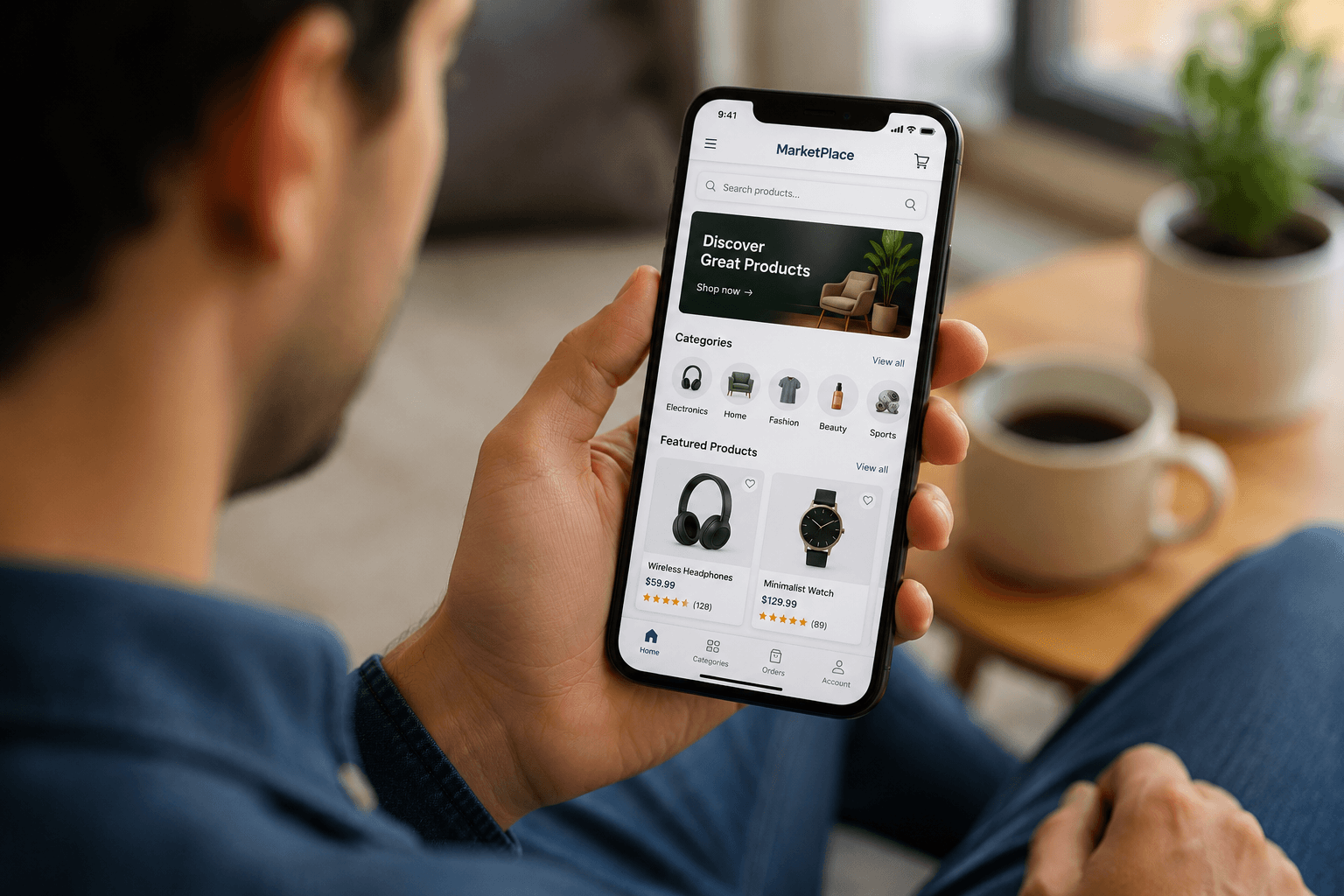
An e-commerce app acts as a virtual retail store, enabling users to browse, purchase, and manage products and services through a mobile interface.
E-commerce apps enhance consumer convenience and help businesses reach a larger audience, making them a valuable part of modern ecommerce platforms. To create a seamless shopping experience, e-commerce apps typically provide product catalogs, wish lists, easy checkout, loyalty programs, and other custom features.
Why Invest in E-Commerce App Development?
In 2025, global e-commerce sales reached $6.42 trillion, a 6.8% increase from the previous year.
The increasing preference for mobile shopping opens a new opportunity for businesses, showcasing the role of e-commerce app development in long-term growth.
When considering your options, you may explore whether e-commerce app development or mobile app development is the right option for you. While e-commerce software development covers a vast array of applications, e-commerce mobile app development is a specialized subset of software development that focuses on online retail and customer interaction, making it the ideal choice for many businesses.
To navigate these choices effectively, app development consulting can be an essential resource. Consultants can help evaluate your business needs, guide you toward the right solution, and ensure your app is strategically positioned to boost engagement and drive growth.
When compared to web platforms, mobile app development for e-commerce has various advantages, including:
- Enhanced user experience: Mobile applications typically offer a better user experience, providing a more personalized and seamless shopping experience than mobile websites. Features like intuitive navigation, saved preferences, and faster load times contribute to enhanced user satisfaction.
- Increased engagement: Mobile applications have multiple features that encourage engagement, such as push notifications, social media integration, and the use of gamification.
- Higher conversion rates: Improved accessibility, a streamlined purchasing experience, and custom features that meet the audience’s specific needs all contribute to higher conversion rates.
- Better customer retention: Loyalty programs, exclusive offers, and personalized recommendations within the app help retain customers and encourage repeat business.
- Brand recognition and loyalty: By providing a user-friendly, personalized, and convenient shopping experience, businesses can improve their online presence and increase loyalty.
- Data collection and insights: Mobile apps enable businesses to collect data on customer behavior and preferences, allowing them to create more accurate marketing campaigns, promotions, and product recommendations.
Types of E-Commerce Apps
The 4 types of e-commerce apps that businesses may require include:
B2B (Business-to-Business)
B2B apps connect businesses with other businesses, such as wholesale suppliers, retailers, organizations, and resellers. Examples of B2B applications include Amazon Business, Shopify, and Alibaba.
Compared to B2C platforms, B2B applications often prioritize backend complexity over front-end user experience, with features like custom pricing, bulk ordering, and account-based purchasing. The checkout flow is also more complex, typically involving negotiated terms, purchase orders, or delayed payments rather than simple one-time transactions.
B2C (Business-to-Consumer)
B2C applications are the most common type of e-commerce app, enabling businesses to sell products directly to consumers without the need for a middleman. Examples include Amazon and eBay.
B2C apps place a strong emphasis on user experience and seamless checkout flows, with intuitive navigation, fast transactions, and minimal friction. While backend systems still play a role, the primary focus is on driving conversions through speed, simplicity, and personalization.
C2B (Consumer-to-Business)
C2B applications allow individuals to sell products or services to businesses, fostering a mutually beneficial relationship. Freelancing platforms are an increasingly popular example of this.
These platforms typically prioritize user experience to attract and retain individual contributors, while the backend supports matching, bidding, or service management systems. The checkout flow is often more flexible, involving proposals, negotiated pricing, or milestone-based payments rather than fixed transactions.
C2C (Consumer-to-Consumer)
C2C applications allow consumers to interact with each other, enabling the transaction of goods or services. This includes platforms like eBay, Etsy, and Craigslist.
These platforms rely heavily on trust-driven user experiences, supported by features like profiles, reviews, and messaging. The checkout flow must accommodate peer-to-peer transactions, often using escrow or platform-managed payments, while the backend supports listings, moderation, and dispute resolution at scale.
Must-Have Features of a Successful E-Commerce App
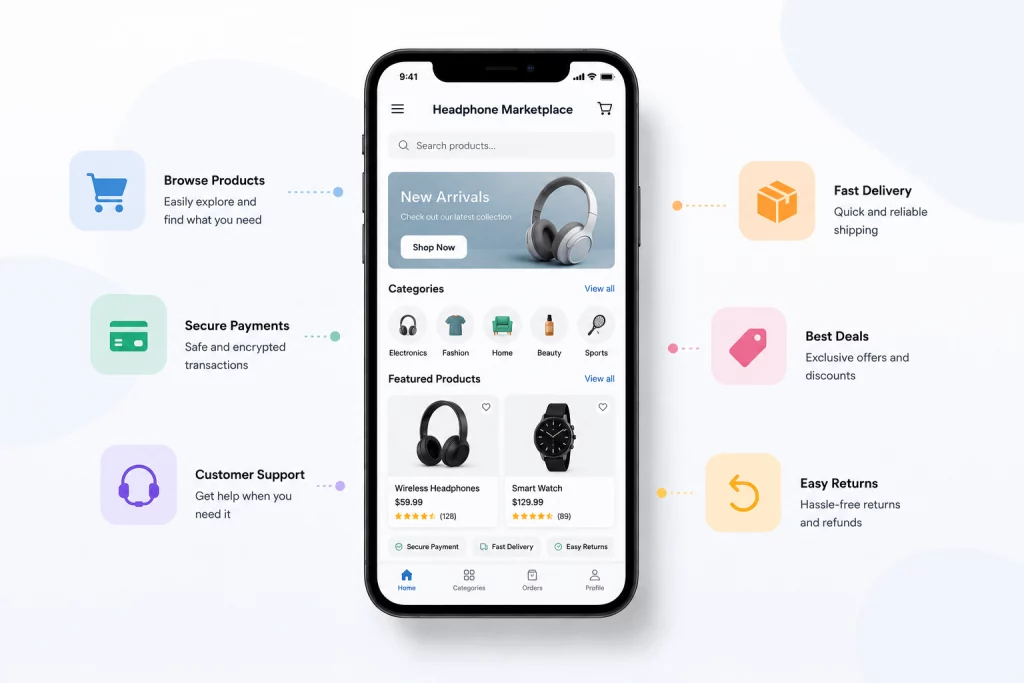
To ensure a successful end product, there are various e-commerce mobile app development features that should be implemented, including a user-friendly interface, secure payment gateway, push notifications, personalized recommendations, and an easy checkout process, among others.
We should note, though, that the features an app has are highly dependent on how complex the application is, with MVP and advanced applications having different offerings.
Essential MVP Features
Planning for an MVP, or minimum viable product, is very different from building an advanced application. As the earliest version of a product, it includes only the essential features needed for companies to validate it in the market.
In the context of e-commerce, the most critical features of an MVP typically include:
- Product catalog: Companies must have a way to showcase their products, often with images, descriptions, and pricing. This may include basic search functionality and product categorization.
- Shopping cart: This is a key feature on e-commerce sites, where it should let customers add items, update quantities or remove items, and view the total price of products.
- Checkout process: From the shopping cart, customers must be able to complete the payment process. After all, you can’t have a store without a way to make sales. This can include shipping details, an order summary before payment, and at least one reliable payment method.
Growth-Stage Features
After an MVP has been tested in the market, companies have a better idea of whether their clients are interested in their app and what they can do to grow their system. The next features typically added include:
- User accounts: This allows users to review past purchases, access saved products, and store information for a faster checkout experience when launching a dropshipping store.
- Improved search and filtering: Rather than basic search functionality, part of this growth includes the ability to filter by price, category, popularity, and more.
- Wishlist: When customers can save products for later, it not only adds convenience but can boost sales. Below, we mention how an advanced site takes it a step further to use it to their advantage.
- Product reviews and ratings: As your site grows, it’s increasingly important to get customer reviews. This may include ratings after a purchase or feedback submissions to build trust and credibility.
Advanced E-Commerce Applications
Advanced applications have more comprehensive features that enhance the user experience. Building on the features mentioned in the previous sections, advanced applications can now implement features like:
- AI-driven personalization: AI can evaluate user behavior and past purchases to make personalized product recommendations and provide dynamic pricing options. This tailored experience adds significant value, helping boost sales by creating smarter e-commerce experiences.
- Marketing automation: This includes automated email campaigns, customer segmentation, and behavior-based triggers like abandoned cart recovery and re-engagement flows. Remember what we said about the wishlist? This automation can send timely reminders to re-engage users and encourage purchases.
- Flexible payment and checkout options: Support for multiple currencies, localized payment methods, subscriptions, and one-click checkout improves global reach and conversion rates.
- Advanced analytics and reporting: Features include customer segmentation, lifetime value (LTV) tracking, and predictive analytics tools that provide deeper insights to guide decision-making.
E-Commerce App Development Costs
E-commerce applications can range anywhere from $10,000 to over $150,000.
If you read those numbers and are even more lost, don’t worry. With complexity of application playing a key role in price, we’re breaking down the different types of applications and their prices:
- Simple MVP: Typically ranges from $10,000 to $30,000, as it includes only core features like product listings, cart, and basic checkout, with minimal customization and integrations.
- Mid-level custom app: Usually falls between $30,000 and $80,000 due to added features like user accounts, improved UX, integrations, and more tailored design.
- Advanced app with more complex functionality: Can range from $80,000 to $150,000+, as it includes advanced features like personalization, automation, analytics, and scalable architecture.
- Marketplace-style app: Marketplace development starts at $120,000 and can exceed $200,000 because it requires multi-vendor functionality, complex payment flows, admin controls, and more robust infrastructure.
The Components of E-Commerce App Development
Developers leverage a combination of software tools and programming languages during mobile e-commerce app development to create tailored solutions for their clients. Technology stacks for e-commerce development include:
Backend Technologies
Proper back-end development ensures that the application performs securely and reliably. During this phase, developers focus on building an infrastructure that enhances website performance and accurately performs core tasks, carefully selecting the technology to accomplish the unique needs of the client. Back-end technologies include:
- Servers: AWS, Google Cloud, and Microsoft Azure are popular servers that are leveraged for hosting, ensuring that the application can handle large amounts of data requests.
- Databases: MySQL, PostgreSQL, and NoSQL databases like MongoDB are necessary for efficient data management and ensuring high performance.
- APIs: RESTful and GraphQL APIs enable seamless communication between the frontend and backend, ensuring secure and efficient API integration for data exchange and functionality.
Frontend Technologies
The front-end of a website is considered the digital storefront of an e-commerce site, encompassing navigation, colors, pictures, product descriptions, and overall aesthetics. To create a visually appealing and intuitive interface, developers must implement the following:
- Frameworks and Libraries: Popular frameworks like React, Angular, and Vue.js build dynamic and responsive user interfaces. These frameworks provide reusable components and facilitate development, making them an important asset for developers.
- UI/UX Tools: Design tools like Sketch, Figma, and Adobe XD create intuitive and visually appealing interfaces, prioritizing user-centric design to enhance the overall user experience.
Mobile Technologies
Depending on the specific needs of your project, developers will choose mobile technologies that meet your unique objectives and requirements. Two of the development approaches that your mobile app development partner may explore include:
- Native Development: Native development is designed to run on a particular operating system, enabling developers to build apps specifically for iOS (using Swift) or Android (using Kotlin or Java). By leveraging platform-specific features, native apps tend to have better performance but require separate codebases for each platform.
- Cross-Platform Development: Cross-platform development is developed to run across multiple devices and operating systems from a single codebase, using frameworks like Flutter, React Native, or MAUI for optimal results. This approach reduces development time and costs but may have limitations in accessing native device features and performance optimization.
What Integrations do E-Commerce Applications Require?
What integrations will you need? Let’s take a quick look at the key ones to consider as your business grows:
- Payment systems: Needed when targeting broader audiences or international markets, where offering preferred payment methods directly impacts conversion rates.
- Inventory and order-management systems: Essential when managing growing product catalogs or multiple sales channels, where stock or order inconsistencies can quickly lead to lost sales.
- Shipping and delivery tools: Become critical once handling orders manually is no longer scalable, helping maintain delivery speed, accuracy, and customer satisfaction.
- CRM or marketing platforms: Important when retention and repeat purchases become a priority, enabling more targeted communication and lifecycle management.
- Analytics tools: Necessary once growth depends on optimization, helping identify what drives conversions and where to invest for better ROI.
- Product search or recommendation tools: Valuable as your catalog expands, improving product discovery and helping customers find relevant items faster, which can directly impact conversion rates.
Not sure what your product needs? Scopic can help define and implement the right integrations as part of a tailored e-commerce product strategy.
Future Trends in E-Commerce App Development
Innovative technology and solutions are emerging as important tools in app development for e-commerce, including:
AI and Machine Learning
Businesses are increasingly using AI in web development and e-commerce app development due to its ability to make apps more efficient. AI streamlines business operations by providing:
- Personalized Recommendations: AI analyzes user behavior and preferences to suggest products that are more likely to interest them, therefore boosting sales and user engagement.
- Chatbots and Virtual Assistants: AI assistants for businesses are becoming increasingly popular in everyday operations due to their role in providing instant customer support. Popular examples of generative AI software include ChatGPT, Gemini, and Midjourney.
- Predictive Analytics: Predictive analytics helps businesses better understand the needs of their target audience, using historical data to forecast trends, improve inventory management, and enhance marketing strategies.
Augmented Reality (AR)
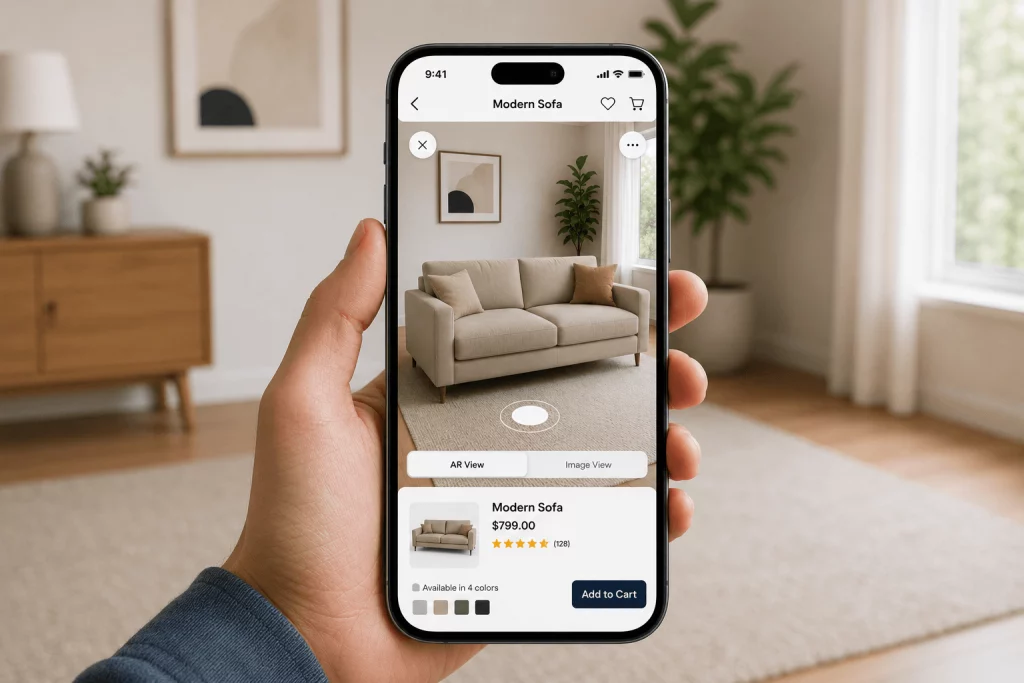
Augmented reality uses real-life interfaces to enable consumers to see products and experiences in their own environment. This creates a new opportunity for:
- Enhanced Shopping Experiences: Consumers that use AR receive an accurate and immersive view of the product, helping them feel more confident about making online purchases. This is particularly useful for items like furniture, home decor, and fashion.
- Virtual Try-Ons: Consumers can now virtually try on products, helping them to visualize clothes, makeup, glasses, shoes, and accessories. With fashion being the second-largest e-commerce category, this feature plays a key role in improving purchase confidence and reducing returns.
Voice Search
Voice search is on the rise in e-commerce applications, allowing for easier and faster searches. Since convenience is a key factor in the success of online stores, the hands-free capabilities of voice search are highly appreciated by online shoppers.
In addition, voice search is important for users with mobility or visual impairments, therefore improving the accessibility of e-commerce applications.
Big Data
Big data refers to extremely large and diverse collections of structured, unstructured, and semi-structured data. The advantages of leveraging big data include:
- Enhanced Personalization: Big data algorithms analyze vast amounts of user data to make personalized product recommendations, improve demand forecasting, adjust prices to meet market conditions, and streamline decision-making.
- Behavior Tracking: By tracking user actions, eCommerce apps can offer a tailored shopping experience, improving customer satisfaction and increasing sales.
One-Click Purchase
One-click payment systems streamline the process by letting buyers make purchases with the payment information they previously provided. This eliminates the need for customers to go through multiple steps during the payment process, therefore improving the overall user experience and increasing conversion rates.
Challenges in E-Commerce App Development
Developers may experience multiple challenges during e-commerce app development, including:
- Data and privacy risks: Strong user data privacy is crucial in preventing data breaches and cyber-attacks. To ensure secure e-commerce mobile app development, developers must implement strong encryption methods (SSL/TLS) and secure coding practices. By applying security best practices, businesses can build a more trusting relationship with their users and ensure legal compliance.
- Scaling difficulties: Applications must be able to scale effortlessly as the needs of businesses change. There are multiple strategies that developers can implement to maintain app performance during peak demand periods, such as load balancing and server optimization, the use of cloud services for scalable infrastructure, and code optimization.
- Operational instability: Applications require continuous updates to address potential issues, leverage new trends and features, and enhance security. To guarantee the success of new updates, comprehensive testing should be performed, which may include unit tests, integration tests, and user acceptance testing. To streamline this process, developers can use advanced monitoring tools to track app performance and detect issues in real-time.
- Payment integration complexities: Developers must know how to navigate the obstacles that come with offering customers multiple payment options and one-click payments, such as integration and secure payment processing.
- Compliance failures: To avoid legal penalties and ensure user data protection, e-commerce applications must comply with regulations, data privacy laws (like GDPR and CCPA), and industry standards (like PCI-DSS). Since laws are constantly shifting and vary between regions, developers must be up to date with changing policies. Utilizing consent management platforms can simplify compliance by automating consent collection, managing user preferences, and ensuring transparency in data handling.
- Performance: Since mobile devices have different screen sizes, resolutions, and hardware capabilities, maintaining high performance on distinct devices is a large concern for developers. Challenges include optimizing for slower devices, maintaining compatibility with older versions of mobile operating systems, and providing support for multiple OS versions.
Steps to Develop an E-Commerce App
The steps for developing an e-commerce app include:
- Defining objectives and goals: Developers must work closely with their clients during the discovery phase to identify the unique goals of the app. Based on the requirements of the client, developers will suggest essential features that align with these goals, ensuring that the e-commerce app is crafted to meet their specific needs.
- Market research and conceptualization: Developers use surveys, focus groups, and market analysis tools to better understand who the target audience is, their preferences, and their shopping behaviors. During this stage, developers will also perform a benchmark on the competitors, analyzing their weaknesses, strengths, and market positioning to identify gaps and opportunities. To ensure the app meets current market needs, developers will also implement new technology and industry trends.
- Choosing the right platform: Depending on your unique business requirements, target market, user demographics, and budget, you must decide if the app should be developed for iPhone, Android, or both, and choose between cross-platform and native app development. Since native app development requires separate apps for iOS and Android, it requires more time and resources but generally has higher performance. Cross-platform development, on the other hand, uses frameworks like Flutter and React Native to allow developers to create one mobile app that runs on multiple devices. This option has a lower e-commerce app development cost but may not have access to all functionalities.
- Designing the UI/UX: Designers must consider the specific needs and behaviors of the users to create a user-centric design, prioritizing simplicity, consistency, and accessibility and keeping a balance between attractive design and functional efficiency. To visualize the app’s layout before development, designers will create wireframes and interactive prototypes.
- Development and testing: Developers will implement best practices to create clean, maintainable code for front- and back-end development. During this phase, they will also integrate features into the application, such as product catalogs, secure payment gateways, and user authentication. To ensure the app is secure, functional, and user-friendly, developers will perform vigorous testing, such as unit tests, integration tests, and beta testing.
- Deployment and marketing: To prepare the application for app store submission, developers will implement ASO best practices and follow the guidelines of the app store review. Your app should also have a comprehensive launch strategy, including pre-launch marketing, user onboarding, and gathering initial user feedback. To improve online visibility and attract users, businesses should explore digital marketing services such as social media campaigns, influencer partnerships, and paid advertising.
Final Thoughts
E-commerce mobile app development is the key to keeping up with today’s technology-driven world, providing a personalized shopping experience, increasing conversion rates, and improving brand recognition. By partnering with a professional marketplace development company that will help you implement advanced features, intuitive design, and AI-powered solutions, you can reach a global audience and enhance brand loyalty.
At Scopic, we leverage advanced technologies and implement best practices to provide comprehensive solutions for our clients, helping them stay competitive in the digital landscape. To learn more about our e-commerce development services, contact us today.
FAQs About E-commerce App Development
How much does it cost to build an e-commerce app?
E-commerce applications can range from $10,000 to over $150,000. The final cost depends on the complexity, features, and level of customization required.
How long does e-commerce app development take?
The timeline to build an e-commerce application ranges from around 3 months for an MVP to over 12 months for an advanced solution. For a more accurate estimate based on your needs, contact our team.
What features are essential for an MVP?
A product catalog, shopping cart, and secure checkout process are the core features of an MVP. These allow users to browse products and complete purchases without unnecessary complexity.
What integrations does an e-commerce app usually need?
Common integrations include payment systems, inventory and order management systems, shipping and delivery tools, CRM or marketing platforms, analytics tools, and product search or recommendation tools. These integrations support scalability, automation, and a more seamless user experience.

About E-Commerce App Development Guide
This guide was authored by Baily Ramsey and reviewed by Alan Omarov, Solutions Architect at Scopic.
Scopic provides quality and informative content, powered by our deep-rooted expertise in software development. Our team of content writers and experts have great knowledge in the latest software technologies, allowing them to break down even the most complex topics in the field. They also know how to tackle topics from a wide range of industries, capture their essence, and deliver valuable content across all digital platforms.



 Message Scopio